Three options, three very different experiences. The right choice depends on where you are going, what time you are travelling, how much you want to spend, and whether you need the booking guaranteed before you walk out the door. For a quick local trip in the inner suburbs during the middle of the day, Uber X and a standard taxi are essentially interchangeable on price. The differences become material for airport transfers, late night trips from outer Melbourne, corporate bookings, and any journey where you cannot afford a cancellation or a surge-priced fare. This guide compares silver taxi, regular taxi, and Uber across the factors that actually matter to Melbourne passengers: pricing structure, surge pricing exposure, airport performance, meet and greet availability, accessibility options, and corporate billing. The comparisons are based on regulated Victorian taxi rates and documented Uber pricing behaviour in the Melbourne market.
This guide breaks down how silver taxi, regular taxi and Uber compare across the things that actually matter: pricing, airport trips, surge pricing, accessibility and corporate travel.
The Three-Way Comparison at a Glance
| Factor | Silver Taxi | Regular Taxi | Uber |
|---|---|---|---|
| Fare structure | Regulated meter | Regulated meter | Algorithm-based, varies |
| Surge pricing | No | No | Yes, can hit 3x at peak |
| Pre-booking | Yes, confirmed | Yes, confirmed | Yes, but no guarantee of pick-up |
| Airport meet and greet | Yes | Varies by operator | No |
| Corporate accounts / Cabcharge | Yes | Yes | No Cabcharge |
| Child seats | Available on request | Available on request | Not guaranteed |
| Wheelchair accessible vehicle | Available on request | Available on request | WAV option, limited availability |
| Driver licensing | VCAA licensed | VCAA licensed | Commercial vehicle accreditation |
| Background checks | Full police check required | Full police check required | Uber platform check |
| Fleet standard | Newer vehicles, set by operator | Varies widely | Varies by driver |
How the Fares Actually Work
Taxis (Silver and Regular)
All licensed taxis in Victoria operate under a regulated fare structure set by the VCAA (Victorian Commercial and Passenger Vehicles Authority). The meter runs the same way regardless of whether you flag down a yellow cab or book a Silver Taxi:
- Flag fall: $9.90
- Rate: $2.20 per km
- Minimum fare: $39.90
- Late night Tariff 3 (Friday and Saturday, 10pm to 4am): $2.34 per km
- Airport return pickup fee: $5.26
- Maxi Taxi (7+ seats): $17.80 surcharge
- Silver Service (premium): $11 surcharge
What this means in practice: the fare you calculate before you leave is the fare you pay. No surprises.
Uber
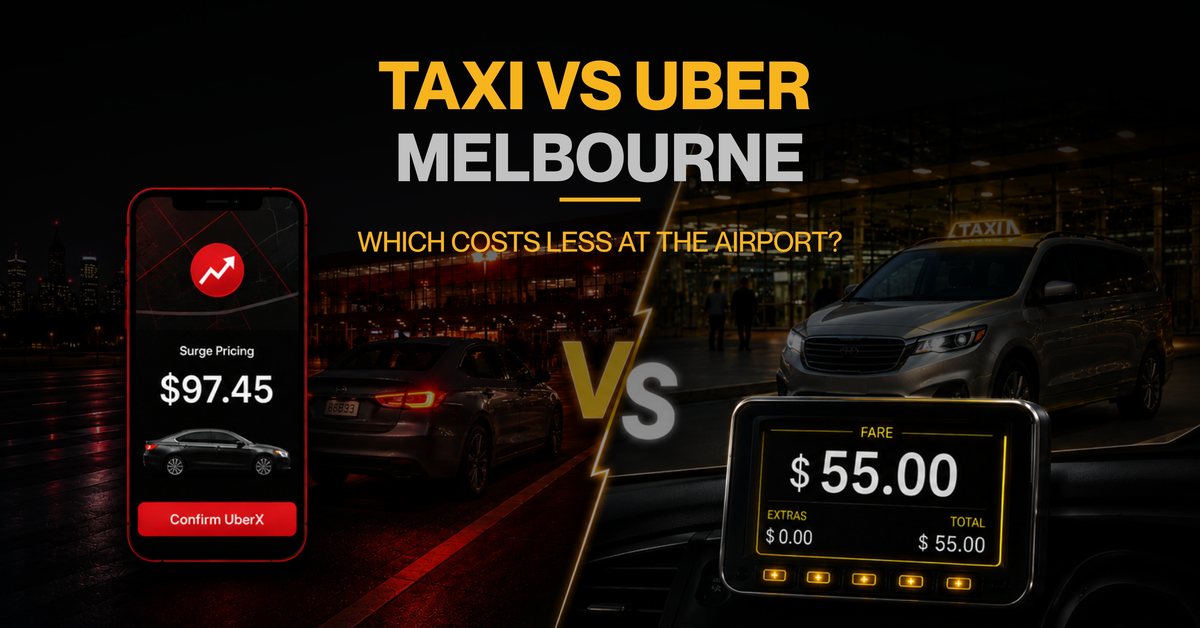
Uber uses dynamic pricing tied to demand. The base rate is generally lower than a taxi during quiet periods, but the algorithm adds multipliers during peak demand. At Melbourne Airport on a Friday or Saturday night, Uber surge pricing can reach 2x to 3x the base rate. A trip that costs $45 during the day can easily cost $90 to $120 when flights land and hundreds of people open the app at once.
Uber also does not accept Cabcharge vouchers or corporate taxi accounts. If your employer pays for business travel via Cabcharge or a taxi docket, Uber is not an option.
When Uber Is Genuinely Cheaper
Uber often wins on short, off-peak trips in inner Melbourne. If you are travelling 3 to 5 km on a Wednesday afternoon, Uber will likely cost $12 to $18 versus the $39.90 minimum taxi fare. For these trips, Uber makes sense.
Uber also tends to be faster to arrive in dense inner-city areas where driver supply is high. If you are in Fitzroy or Richmond at 2pm and need to get to the CBD, opening the Uber app will probably get you a car faster than calling a taxi dispatch.
When a Taxi Is the Better Choice
Airport pre-bookings. A taxi booking is confirmed. A driver is assigned, your name goes in the system, and the driver shows up. Uber does not work this way. You request a ride when you are ready, and there is no guarantee a driver accepts. For early morning airport runs, confirmed taxi pre-booking removes the risk entirely.
Peak periods and Tariff 3. On Friday and Saturday nights after 10pm, the taxi Tariff 3 rate of $2.34/km is fixed. Uber surge pricing at the same time can far exceed that. The taxi is the cheaper, predictable option during peak nightlife hours.
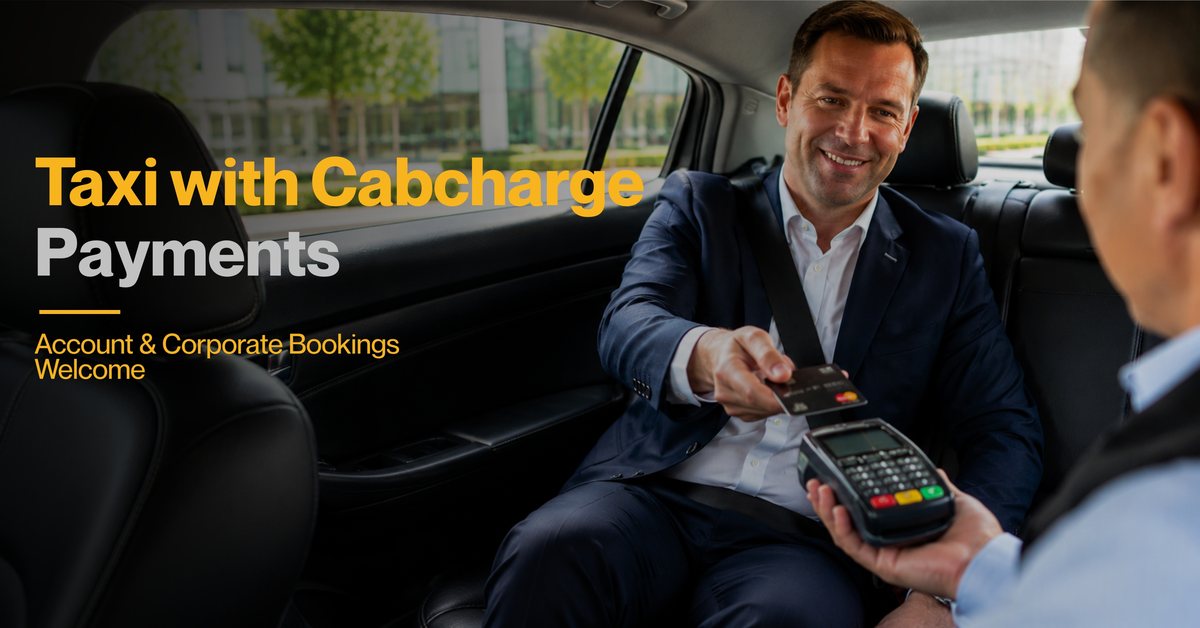
Corporate and business travel. Taxis accept Cabcharge, corporate accounts and taxi dockets. Receipts are printed automatically. Uber receipts come by email and cannot always be reconciled through company expense systems that require a taxi receipt.
Passengers with special needs. Child seats, wheelchair accessible vehicles and booster seats need to be booked in advance with a taxi operator. Uber’s WAV option has limited availability across Melbourne and often requires a long wait.
No smartphone or poor signal. Taxis can be booked by phone, flagged on the street, or picked up from a taxi rank. Uber requires the app, an account and a working data connection.
What Sets Silver Taxi Apart from a Regular Taxi
A common question: if Silver Taxi and a regular yellow cab charge the same meter rate, why choose Silver Taxi?
The VCAA regulates both equally. The meter, the licensing, the driver background checks are all identical. What differs is the fleet standard and the service focus.
Silver Taxi Melbourne operates newer vehicles maintained to a higher standard than the average cab fleet. The business is focused on the Melbourne corridor: Frankston Line, Dandenong and Cranbourne Line, and Clayton. Drivers know the routes, the suburbs and the traffic patterns in this area specifically. You are not getting a driver who has just shifted from the CBD and is unfamiliar with Carrum or Lynbrook.
The Silver Service option ($11 surcharge) upgrades to a higher-specification vehicle and a formal service standard, which suits corporate clients and special occasions.
The Surge Pricing Reality at Melbourne Airport
Uber surge at Tullamarine is not rare. It is predictable. When multiple international and domestic flights land within a short window, common on Friday and Saturday evenings, every arriving passenger opens Uber at the same time. Supply does not scale fast enough, and prices spike.
Trips from Melbourne to the airport typically run 45 to 80 km. At 3x surge, a $90 taxi fare becomes a $270 Uber fare. This is not hypothetical. It happens regularly, and there is no cap that protects you.
The fix is simple: book a taxi before you fly. The return pickup fee of $5.26 applies, but the fare is metered and fixed regardless of what Uber is doing at that moment.
Driver Accountability
All VCAA-licensed taxi drivers hold a current commercial passenger vehicle driver accreditation. This requires a full police check, a medical assessment, a driving history check and completion of the VCAA driver training program. The accreditation is renewed periodically and can be revoked.
Uber drivers in Victoria hold a commercial vehicle accreditation, but the vetting process is run by Uber as a platform. The depth of background screening is not equivalent to the VCAA process, and accountability for incidents runs through Uber’s internal complaints process rather than a government regulator.
This matters most if you are travelling alone late at night, sending a family member, or booking transport for a child.
Is Uber or a taxi cheaper from Melbourne Airport?
It depends on the time and date you are travelling. During off-peak periods, Uber can be slightly cheaper than a metered taxi because its base rates are lower. However, Melbourne Airport is one of the most consistent locations for Uber surge pricing in Victoria. When multiple flights land within a short window, demand spikes and Uber’s algorithm raises prices automatically. On a Friday or Saturday evening, surge multipliers of 2x to 3x are common, which makes a taxi significantly cheaper. A metered taxi from Tullamarine to Melbourne suburbs runs on a fixed VCAA-regulated rate: $9.90 flag fall, $2.20 per km, plus a $5.26 return pickup fee. That total is predictable before you leave the arrivals hall. With Uber, you only see the price when you open the app, and by then you may have limited alternatives. For airport trips, especially during peak periods, pre-booking a taxi removes the surge risk entirely and guarantees a driver will be waiting for you.
What is the difference between a Silver Taxi and a regular taxi in Melbourne?
Both Silver Taxi and regular yellow taxis in Melbourne operate under the same VCAA regulatory framework. The meter fare, the driver licensing requirements, the background check process and the legal obligations are identical. Where they differ is in fleet quality and service focus. Silver Taxi Melbourne runs a newer fleet maintained to a higher standard than the average taxi operator, and the business is built around the Melbourne corridor specifically: Frankston Line, Dandenong and Cranbourne suburbs, and Clayton. Drivers who work this corridor regularly know the local roads, traffic patterns and suburb layouts better than a driver based out of the CBD. Silver Taxi also offers a Silver Service upgrade (with an $11 surcharge) that provides a higher-specification vehicle and a more formal service standard, suited to corporate travel or occasions where presentation matters. For most passengers, the practical difference comes down to fleet condition, local knowledge and the ability to pre-book for airport runs.
Does Uber have surge pricing at Melbourne Airport?
Yes, and it happens frequently. Melbourne Airport (Tullamarine) is a high-demand location where Uber surge pricing is a regular occurrence rather than an occasional one. When multiple domestic and international flights arrive within a short period, hundreds of passengers open the Uber app at the same time. Driver supply in the area cannot scale fast enough to meet that demand, so Uber’s algorithm raises the price to balance the market. Surge multipliers of 2x to 3x are common on Friday and Saturday evenings, and during public holiday periods the situation is often worse. On a route from Tullamarine to Dandenong or Frankston, the metered taxi fare sits around $80 to $110. At 3x surge, the same Uber trip can cost $240 to $300. There is no cap that protects passengers from this. The only reliable way to avoid airport surge pricing is to pre-book a licensed taxi, where the regulated meter fare applies regardless of demand at the time of your trip.
Why choose a taxi over Uber for late night travel in Melbourne?
There are three practical reasons to choose a taxi for late night travel in Melbourne. First, pricing: on Friday and Saturday nights between 10pm and 4am, taxis operate on the VCAA Tariff 3 rate of $2.34 per km. This is a fixed, regulated rate. Uber during the same window applies surge pricing based on demand, and during peak nightlife hours in Melbourne the surges are substantial. Second, accountability: VCAA-licensed taxi drivers hold a current driver accreditation that requires a full police check, medical assessment and government-issued training. This provides a clear regulatory framework if something goes wrong. Third, availability at rank locations: licensed taxis queue at designated ranks outside major venues, hotels and transport hubs. You do not need a working phone, the app or a data connection. You walk out and get in. For anyone travelling alone late at night, the combination of fixed pricing, regulated drivers and no-app access makes a taxi the lower-risk option.